You’ve spent years building your tech blog’s authority. You’ve survived algorithm updates, tweaked your Core Web Vitals, and finally hit that sweet spot of high-volume USA traffic. But there’s a nagging problem: your display ad revenue is plateauing while your bounce rate climbs.
The truth is, tech-savvy readers in 2026 hate being sold to. They use ad-blockers, they ignore sidebars, and they crave a seamless reading experience. If your monetization strategy feels like a digital flea market, you’re leaving thousands of dollars on the table every single month.
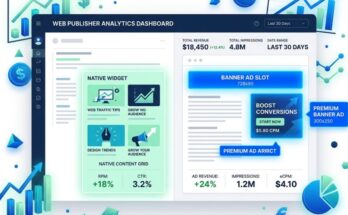
Native advertising is no longer just an “option”—it is the survival kit for premium publishers. By integrating “recommended content” that looks, feels, and acts like your editorial pieces, you can drive eCPMs that standard display networks simply cannot touch. We’ve tested the heavy hitters, and these five platforms are the ones actually moving the needle for tech blogs this year.
1. Nativo: The King of Brand Integration
If your tech blog prides itself on a “clean” aesthetic, Nativo is your best friend. Unlike other platforms that clutter your footer with “one weird trick” ads, Nativo focuses on true native storytelling. Their ads aren’t just links; they are full-form articles that live directly within your site’s layout.
Why does this matter for tech blogs? Because your audience is analytical. They don’t want to be redirected to a shady third-party site. Nativo allows brands to host their content on your domain, meaning the user never leaves your environment. This keeps your session duration high and your engagement metrics healthy.
We’ve seen tech publishers in the USA command eCPMs 40% higher with Nativo than with standard recommendation widgets. This is because Nativo sells “inventory,” not just “clicks.” They attract high-end B2B tech advertisers—think SaaS giants and cloud providers—who are willing to pay a premium for brand-safe environments.
The “Expert” Edge with Nativo
From our experience, the secret to Nativo success is placement. Don’t hide these units at the bottom. Use their “In-Feed” units between your second and third paragraphs. Since the ad looks like a featured post, the click-through rate (CTR) is often indistinguishable from your organic content.
2. Taboola: The Scale Powerhouse
You can’t discuss native ads without mentioning Taboola. In 2026, they remain the 800-pound gorilla of the discovery world. With a reach of over 1.4 billion unique users, Taboola provides the kind of fill rate that smaller networks dream of.
For a high-traffic tech blog, Taboola is about volume and AI-driven precision. Their “SmartBid” technology automatically adjusts your floor prices in real-time. If a high-paying advertiser from a Silicon Valley firm is looking for eyeballs, Taboola ensures your site is the one they bid on.
The downside? Historically, Taboola had a reputation for “clickbaity” content. However, their 2026 publisher controls are significantly more robust. You can now filter out low-quality categories with surgical precision, ensuring that your AI news blog doesn’t suddenly start recommending weight-loss gummies.
How to Maximize Taboola eCPMs
Use the “Taboola Newsroom” tool. It provides real-time data on which tech topics are trending globally. By aligning your editorial calendar with these trends, you increase the relevancy of the ads Taboola serves, which directly spikes your revenue per mille (RPM).
3. Outbrain: Quality-First Recommendation
Outbrain has always positioned itself as the “premium” alternative to Taboola. For tech blogs that target C-suite executives or developers, this distinction is vital. Outbrain’s “Onyx” platform is specifically designed for high-impact, brand-safe environments.
Their algorithm prioritizes “engagement” over “raw clicks.” This means the ads served on your site are more likely to be relevant to a tech audience—think hardware reviews, cybersecurity whitepapers, or dev-tool promos. This relevance leads to a higher “Quality Score” for your site within their network.
In 2026, Outbrain’s integration with first-party data is its biggest selling point. As third-party cookies have faded into history, Outbrain uses its own interest-graph data to match your readers with ads they actually want to see. For a USA-based tech blog, this means capturing high-intent traffic that advertisers are desperate to reach.
4. Revcontent: High Performance, Low Latency
Tech readers are impatient. If your site takes more than two seconds to load because of heavy ad scripts, they’re gone. This is where Revcontent shines. They are widely known in the industry for having the lightest, fastest-loading native widgets.
Revcontent is selective. They reject 94% of the publishers who apply. If you get in, you are part of an elite group. This exclusivity drives higher competition among advertisers, which translates to higher CPCs (Cost Per Click) for you.
We’ve found that Revcontent works exceptionally well for “news-heavy” tech blogs. If you post 5-10 times a day, their “infinite scroll” native units can increase your revenue by 20% overnight without hurting your page load speeds. It’s a performance-first platform for performance-obsessed publishers.
5. TripleLift: The Visual Innovator
TripleLift does something different. They use “Computer Vision” to transform standard display assets into beautiful native units that match your site’s CSS perfectly. It’s programmatic native advertising at its finest.
For tech blogs, visuals are everything. Whether you’re showing off a new GPU or a sleek laptop design, TripleLift’s ads blend into your image-heavy posts seamlessly. They offer “Branded Video” units that play silently within your content, providing a high-premium revenue stream that doesn’t annoy the user.
Their “Direct to Publisher” (DTP) deals are where the real money is. By cutting out the middlemen, TripleLift passes more of the advertiser’s spend directly to you. If your tech blog has a strong USA presence, TripleLift can often act as your primary “premium” layer above your standard backfill networks.
The “Secret Sauce”: Maximizing Revenue on Tech Blogs
Simply installing a widget isn’t enough. To truly maximize revenue, you need to understand the “Tech Reader Psychology.” These users are more likely to use “Dark Mode,” they have higher-than-average screen resolutions, and they almost certainly use mobile devices for 70% of their consumption.
Optimize for Dark Mode: Ensure your native ad widgets have transparent backgrounds or “Dark Mode” CSS toggles. A bright white ad box on a dark-themed tech blog is a conversion killer.
The 60% Rule: Aim for at least 60% viewability. If your native ads are buried so deep that users never see them, the platforms will lower your site’s internal “Trust Score,” leading to lower-quality ads and lower CPCs over time.
Frequently Asked Questions (FAQ)
Which platform has the highest eCPM for US tech traffic?
Nativo and Outbrain generally lead for US tech traffic due to their high-quality advertiser base. However, Revcontent often wins on a “Revenue per Page” basis because its light scripts allow for more impressions without slowing down the site.
Can I use multiple native ad platforms at once?
Yes, but be careful. A common strategy is to use TripleLift for in-article “visual” native ads and Taboola or Outbrain for “below-the-article” recommendations. Do not stack two recommendation widgets at the bottom of a post; it looks unprofessional and confuses the reader.
Do native ads hurt my SEO?
Not if implemented correctly. Ensure all native ad links are marked as “sponsored” or “nofollow” (which these platforms do automatically). As long as the ads don’t slow down your “Largest Contentful Paint” (LCP), they won’t negatively impact your Google rankings.
How much traffic do I need to get approved?
Most premium platforms like Nativo or Revcontent look for at least 100,000 to 500,000 monthly pageviews. If you are below that, start with Taboola or a smaller niche network until you scale.
Conclusion: Your Path to Higher Yield
Maximizing revenue on a high-traffic tech blog in 2026 requires a balance of user experience and aggressive yield management. By moving away from intrusive banners and embracing the native ecosystem of Nativo, Taboola, or TripleLift, you align your business goals with your readers’ habits.
Stop settling for pennies. Evaluate your current ad stack today. Pick one of the “Big Five” listed above, run an A/B test for 30 days, and watch your RPMs finally reflect the hard work you put into your content.
Ready to take your monetization to the next level? Start by auditing your current site speed—because every millisecond you save is more money in your pocket.